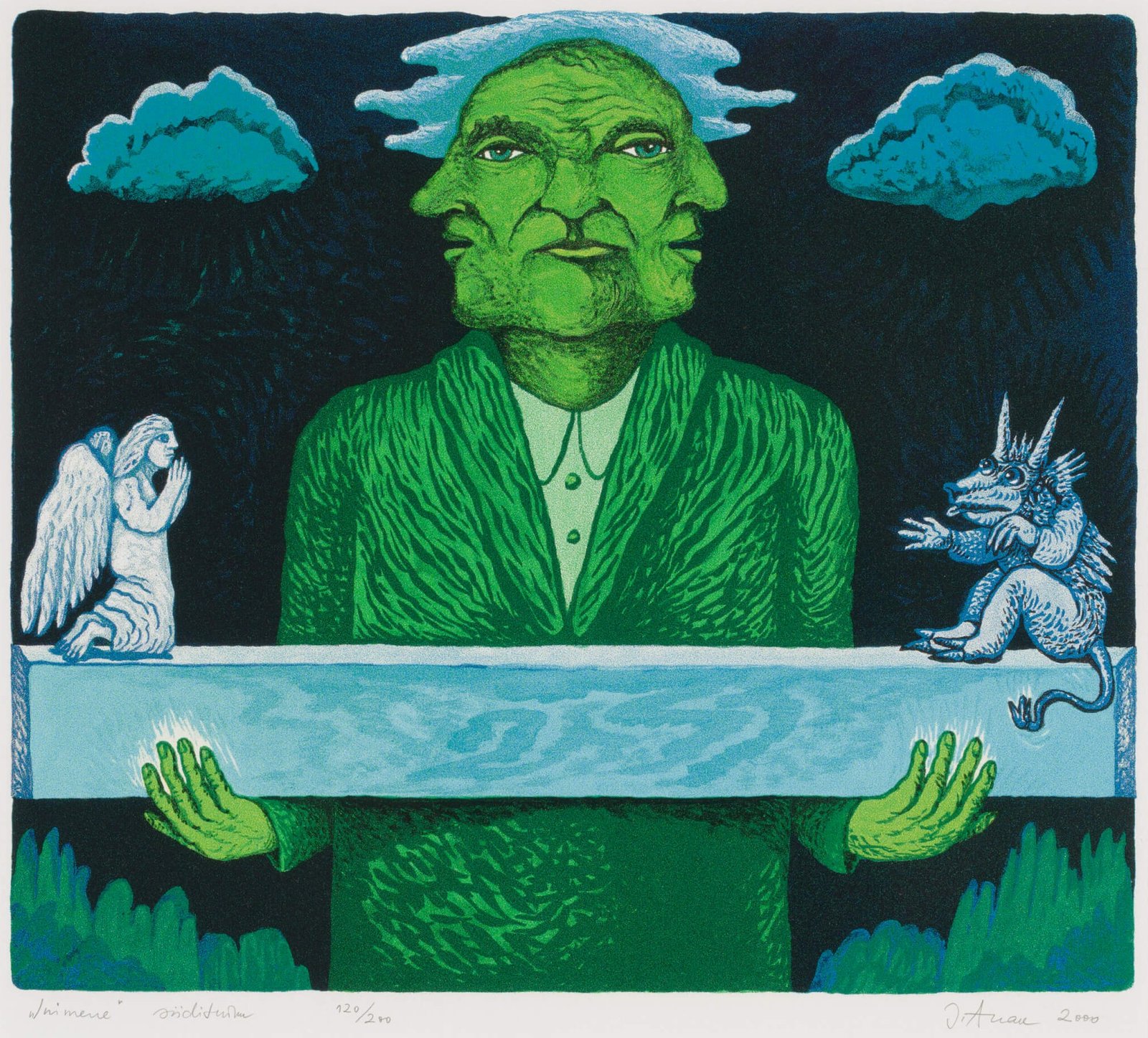
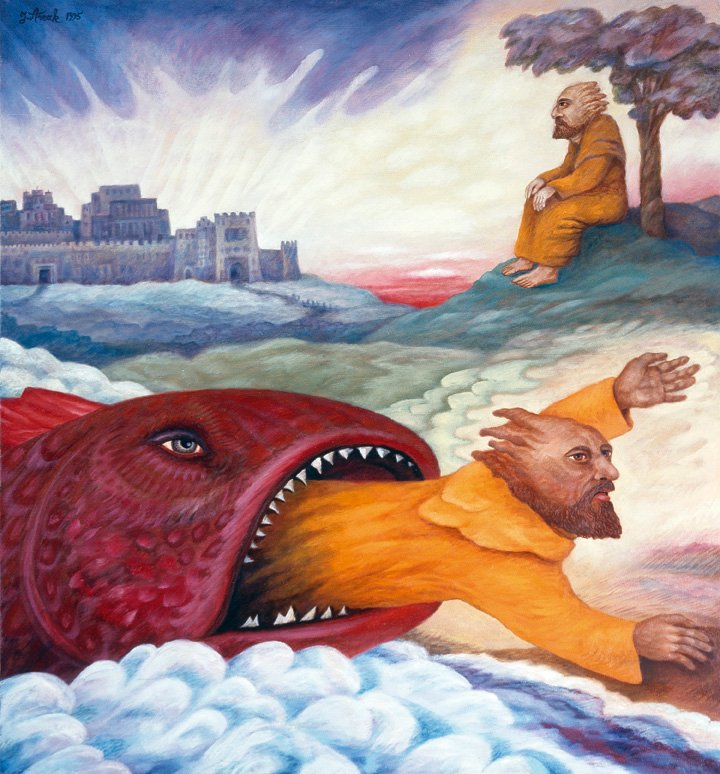
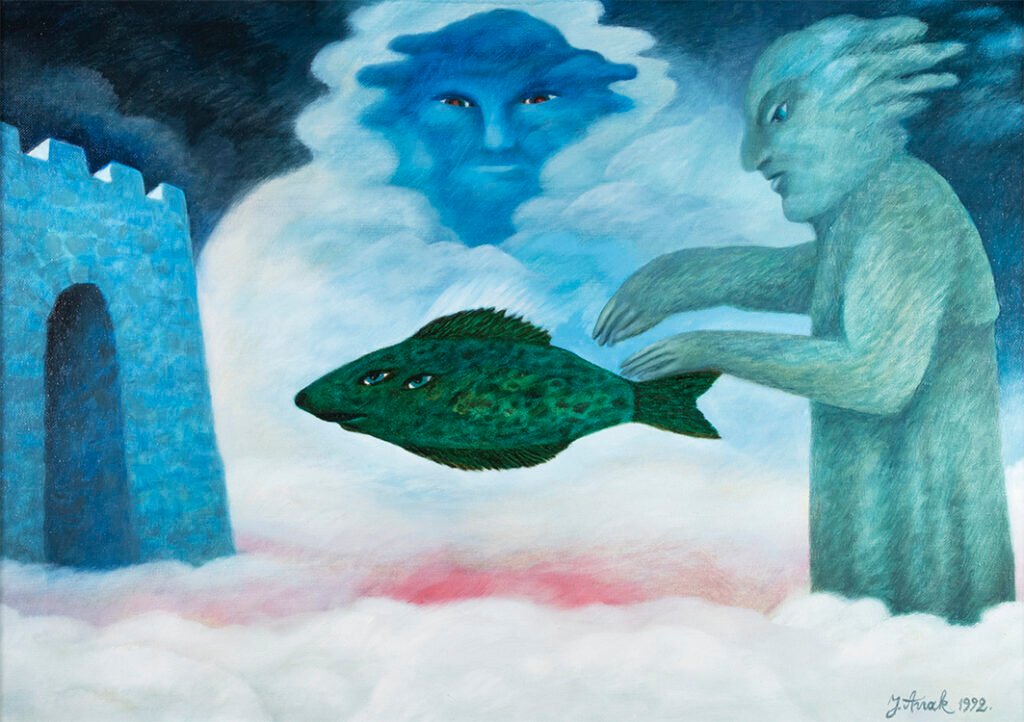
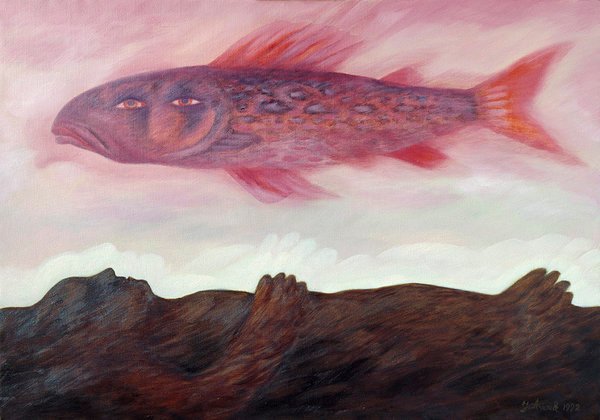
In Jüri Arrak’s work, dreams, myths, and strange characters meet in a world that feels at once familiar and completely surreal.
Fun facts. Did you know…?
- Before becoming a legend in the Estonian art world, Jüri Arrak worked both as a mining electromechanic and a taxi driver.
- Jüri Arrak created his well-known “sign-human” style for his first solo exhibition in 1970 – the freely painted human and animal figures were born from a desire to create something completely different from the conventional art of the time.
- Half of Estonia still remembers Arrak’s “Suur Tõll” characters as if they were some strange artistic fever dream.
- His monumental painting “Ratsasõda” (“War on Horseback”) was created in a tiny threshing room smaller than many modern studio apartments, where even Arrak himself could barely fit, making the whole process feel almost physically impossible.
- Before creating the painting “Käskude saamine” (“Receiving the Commandments”) for the Prime Minister’s office, Arrak spent an entire day simply observing how the country was being governed.
- Jüri Arrak also explored religious and biblical themes in his work—especially after creating the altar painting for Halliste Church—though this was only one chapter in his long and diverse artistic career.
- Jüri Arrak held more than 100 solo exhibitions throughout his lifetime; his work traveled from Tallinn and Tartu to Toronto, Reykjavík, Athens, Lissabon, and Washington, D.C.
“The beings in Arrak’s artworks are strange archetypal inhabitants with distorted expressions and forms, appearing to take part in mysterious rituals and activities that may seem incomprehensible to us, yet deeply important to them. This is not the world we perceive while awake in everyday life, but a world of dreams, fantasy, and myths — where everything can feel at once familiar and recognizable, yet also foreign and fleeting; where people and elephants fly, and animals have human eyes./…/ The central theme of Arrak’s art is the search for the meaning and mystery of life, where the artist uses myths, absurd and fantastical situations, and symbolic imagery to raise questions about the reality of our present existence and our place in the cosmos.”
Eda Sepp, art historian